Tile Backsplash Installation in Tallahassee
A backsplash is a small area with an unusual number of decisions in it. Almost all of the visible quality comes down to layout: where the first course starts, how the run handles outlets and windows, and how the edges are finished.
Backsplash Tile Options
The wall between the counter and the cabinets is one of the few places in a house where nearly any tile material is a reasonable candidate. It sees splashes and heat near the range but very little abrasion, so durability ratings matter less here than they do on a floor.
- Ceramic — the workhorse. Easy to cut, widely available, and forgiving on a wall.
- Porcelain — denser and often available in larger panels for a nearly grout-free look behind a range.
- Glass — bright and reflective, but harder to cut cleanly and usually needs a white setting material so the color is not muddied from behind.
- Subway tile — the standard 3x6 and its relatives. Simple to install, though the pattern choice (running bond, stacked, vertical, herringbone) changes labor noticeably.
- Mosaic sheets — mesh-mounted small tile. Fast to cover area but slow to keep aligned, and the sheet seams have to be disguised.
- Natural stone — marble, travertine and slate. Porous, so it needs sealing, and it reacts poorly to acidic cleaners in a kitchen.
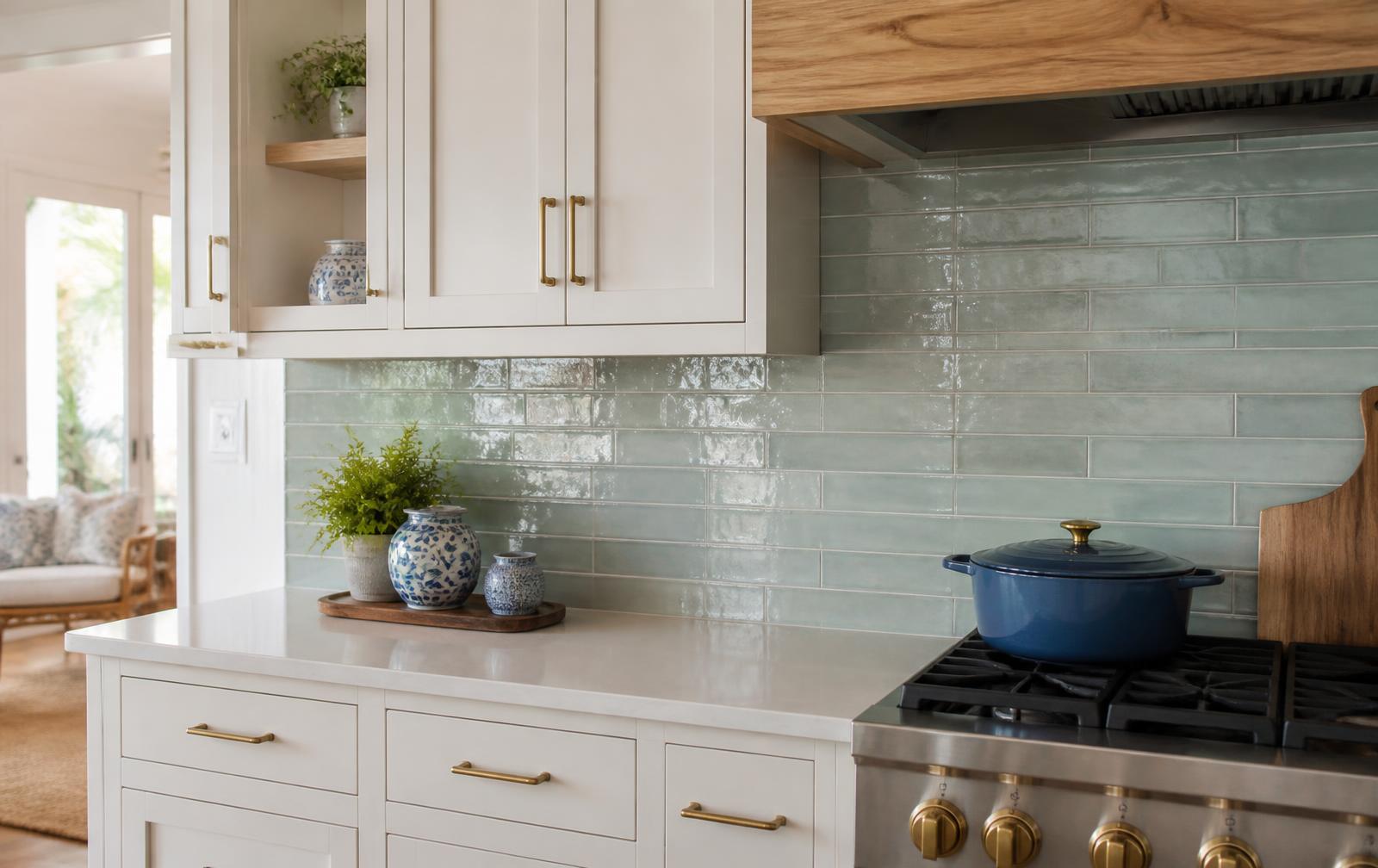
Layout Is the Whole Job
Where the first course lands
The counter is the reference, but the cabinets, the window sill and the hood all compete for alignment. A good installer looks at all of them before setting anything and picks the compromise that looks intentional.
Outlets and switches
Cuts around electrical boxes are the most visible cuts in a backsplash. Cover plates come off, boxes get extenders, and the tile is cut so the plate covers the edges cleanly.
The range and hood wall
Often treated as a feature: full height, a different pattern, or a single large panel. This is also where heat and grease concentrate, which is worth factoring into material choice.
Windows and end walls
A run that dies into an open wall needs an edge treatment — a metal profile, a bullnose piece, or a returned edge. Window openings need the reveal handled the same way.
Wall condition
Bowed or wavy walls show up immediately in a tight tile pattern. Old adhesive, wallpaper, textured paint and previous backsplash residue all have to be removed or corrected first.
Removing an old backsplash
Tile removal from drywall usually damages the paper face, so drywall repair or skim coating is often part of the scope. Budget for it rather than being surprised by it.
Grout choice
Color changes the look more than most people expect: matching grout makes the field read as one surface, contrasting grout emphasizes the pattern. Stain resistance matters in a kitchen.
Caulk, not grout, at the seam
The joint where tile meets the countertop is a change of plane and should be a flexible sealant rather than rigid grout, so normal movement does not crack it.
If the kitchen floor is part of the same project, see tile floor installation. For how a small job like this gets priced, the cost guide has a section on backsplash cost factors.
Backsplash questions
Adding or replacing a backsplash?
Let us know the approximate length of the run, whether an old backsplash needs to come off, and what tile you are considering. A photo of the kitchen is the most useful thing you can send.
Request a Backsplash Estimate