Ceramic vs. Porcelain Tile in Florida Homes
The two look similar in a showroom and the labels are used loosely. The difference is measurable, though, and it matters in some rooms and barely matters in others.
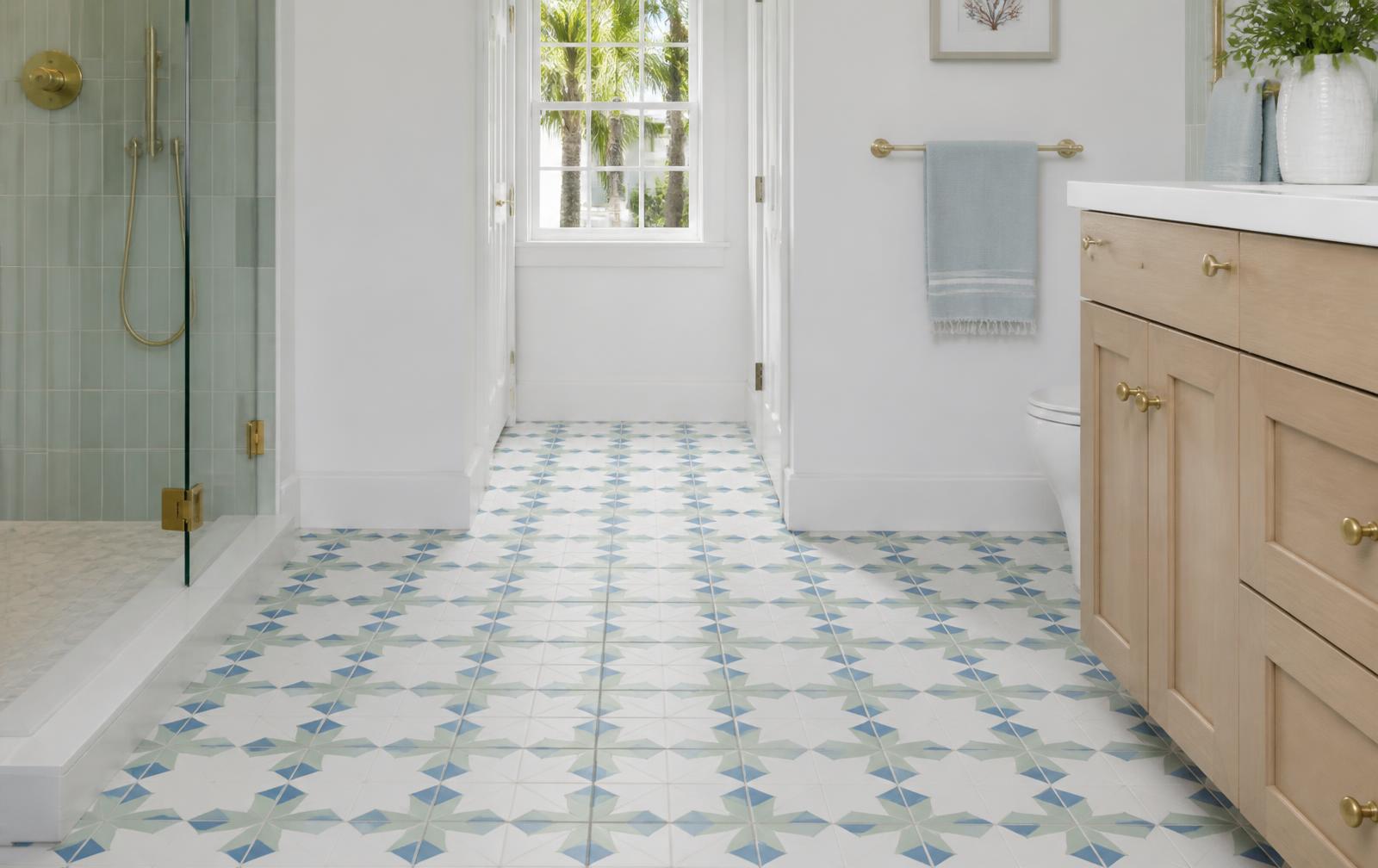
The technical difference is water absorption
Both are fired clay. Porcelain uses a finer, denser clay body fired at a higher temperature, and the standard industry threshold is water absorption of 0.5% or less by weight. Ceramic absorbs more than that.
Everything else people say about the two follows from that number. Lower absorption generally means higher density, more strength in thin formats, better performance where water is present, and frost resistance outdoors. Higher absorption is not a defect — it just limits where the tile belongs.
Where each one makes sense
Choose porcelain for:
- Shower floors and shower walls, where water is constant.
- Main-floor traffic paths, entries and anywhere near an exterior door.
- Covered patios, porches and other exterior surfaces.
- Large-format tile and thin plank formats, where density helps.
- Laundry rooms, mudrooms and anywhere a leak is plausible.
Ceramic is a reasonable choice for:
- Kitchen backsplashes and other dry walls.
- Bathroom walls above the wet zone.
- Decorative accents and intricate patterns where easier cutting helps.
- Bathroom floors in secondary bathrooms, if the tile is rated for floor use.
What actually matters more than the label
In a humid climate, the thing that protects a shower is not the tile body. It is the waterproofing membrane behind it, the slope of the pan, and the way the corners and changes of plane are detailed. Porcelain over a poorly waterproofed shower will fail. Ceramic on a properly built dry wall will last decades.
So before comparing tile bodies, get these right:
- Floor rating. Confirm the tile is rated for floors if it is going on a floor, and check the abrasion class against expected traffic.
- Slip resistance. Published as a coefficient of friction. Matters most on shower floors, bathroom floors and entries.
- Format versus substrate. The bigger the tile, the flatter the floor has to be. This is where budgets move.
- Through-body versus glazed. Through-body porcelain hides chips; a glazed tile shows the clay body underneath when chipped.
- Natural stone is a different category. Marble and travertine are porous and need sealing and gentle cleaners regardless of anything above.
For how these choices affect a specific room, see tile floor installation or custom tile showers.
Ceramic and porcelain questions
Ready to get a tile estimate?
Share the space, the type of tile work and your rough timeline. We will review the details and, when appropriate, a local tile professional can reach out to talk through the project.
Request an Estimate